無線物聯(lián)網(wǎng)LTE MTC/eMTC ,NB-IoT認(rèn)證測(cè)試
一、物聯(lián)網(wǎng)發(fā)展趨勢(shì)
NB-IoT是基于移動(dòng)通信網(wǎng)絡(luò)的物聯(lián)網(wǎng)技術(shù)體系,具有廣覆蓋、大連接、低功耗、低成本的優(yōu)勢(shì),解決了傳統(tǒng)物聯(lián)網(wǎng)存在的技術(shù)碎片化、覆蓋不足的問題,極大提升了物聯(lián)網(wǎng)的應(yīng)用能力,獲得了業(yè)內(nèi)的廣泛支持,將成為物聯(lián)網(wǎng)主流技術(shù)。
目前,全球多個(gè)運(yùn)營(yíng)商緊跟NB-IoT發(fā)展步伐,在標(biāo)準(zhǔn)協(xié)議完成之后第一時(shí)間進(jìn)行技術(shù)驗(yàn)證、測(cè)試和商用部署。根據(jù)GSA統(tǒng)計(jì),截至2019年1月中旬,全球45個(gè)國(guó)家/地區(qū)的78家運(yùn)營(yíng)商正式商用NB-IoT網(wǎng)絡(luò),網(wǎng)絡(luò)數(shù)量是去年同期的兩倍。
二、物聯(lián)網(wǎng)的應(yīng)用以及技術(shù)標(biāo)準(zhǔn)要求
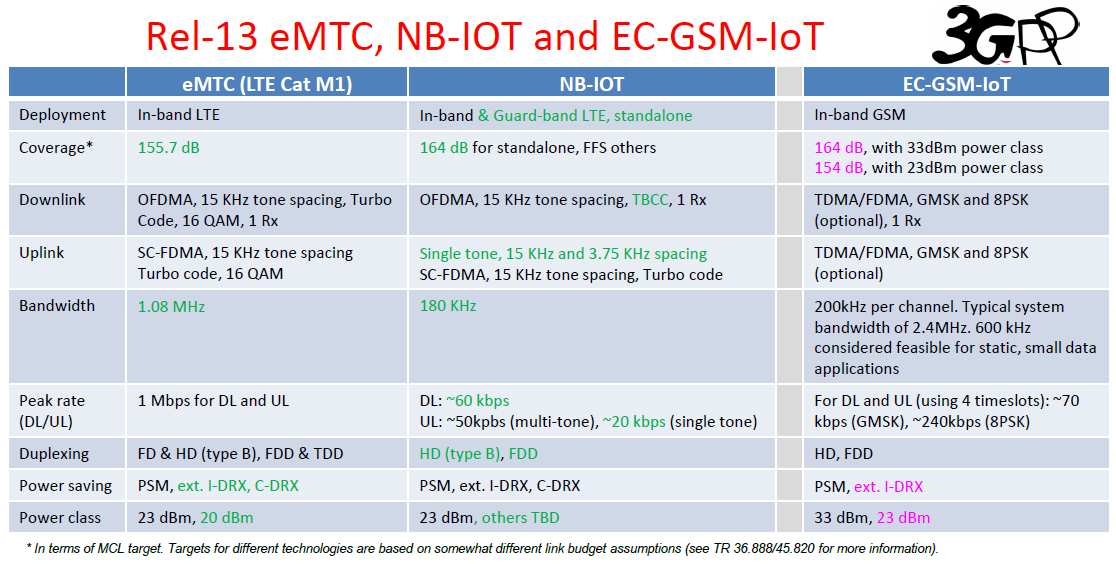
In Release-14 3GPP is enhancing the above technologies
• Positioning enhancements [eMTC, NB-IOT, EC-GSM-IOT]
• Multicast, mobility enhancements for [eMTC, NB-IOT]
• New power classes, access/paging enhancements [NB-IOT]
• Higher data rates and VoLTEsupport for [eMTC]
 ?
?
根據(jù)CEPT(ECC)定義的標(biāo)準(zhǔn),信特斯可以完整的測(cè)試LTE MTC/eMTC、NB-IoT UE端的測(cè)試標(biāo)準(zhǔn),以下是UE終端,BS終端,多功能終端的標(biāo)準(zhǔn)要求
Description and technical conditions for IoT Cellular Systems
|
Technologies |
Applicable ETSI standards |
Technical conditions |
|
EC-GSM-IoT |
EN 301 502 [25] EN 301 511 [26] EN 301 908-18 [27] |
No specific requirements in addition to GSM (note 1) and the applicable harmonised standards |
|
LTE MTC/eMTC |
EN 301 908-1 [23] EN 301 908-13 [31] EN 301 908-14 [32] EN 301 908-15 [33] EN 301 908-18 [27] |
No specific requirements in addition to LTE (note 2) and the applicable harmonised standards |
|
NB-IoT |
EN 301 908-1 [23] EN 301 908-13 [31] EN 301 908-14 [32] EN 301 908-15 [33] EN 301 908-18 [27] |
Standalone mode • A frequency separation of 200 kHz or more between the standalone NB-IoT channel edge of one network and the UMTS/LTE channel edge of the neighbouring network. • A frequency separation of 200 kHz or more between the standalone NB-IoT channel edge of one network and the GSM channel edge of the neighbouring network. In-band mode • No specific requirements in addition to LTE (note 2) and the applicable harmonised standards Guard band mode • A frequency separation of 200 kHz or more between the NB-IoT channel edge and the edge of the operator's block, taking into account existing guard bands between operators' block edges or the edge ofthe operating band (adjacent to other services). |
|
Note 1: Frequency separation requirements on GSM as defined in ECC Report 266 [14] Note 2: Frequency separation requirements on LTE as defined in ECC Report 266 [14] |
||
沃特檢驗(yàn)集團(tuán)旗下信特斯實(shí)驗(yàn)室獲得CNAS、NVLAB等授權(quán),擁有豐富的測(cè)試經(jīng)驗(yàn)和完善的解決方案, 能夠?yàn)槎叹嚯xSDR產(chǎn)品 (藍(lán)牙、WI-FI、無線遙控器、Zigbee等)、2G、3G、4G手機(jī)等無線射頻產(chǎn)品提供美國(guó)FCC、加拿大ISED、歐盟CE、臺(tái)灣NCC、韓國(guó)KCC、日本Telec/JATE、埃及NTRA等一站式檢測(cè)認(rèn)證服務(wù)!